Predator Free Te Kinga Project
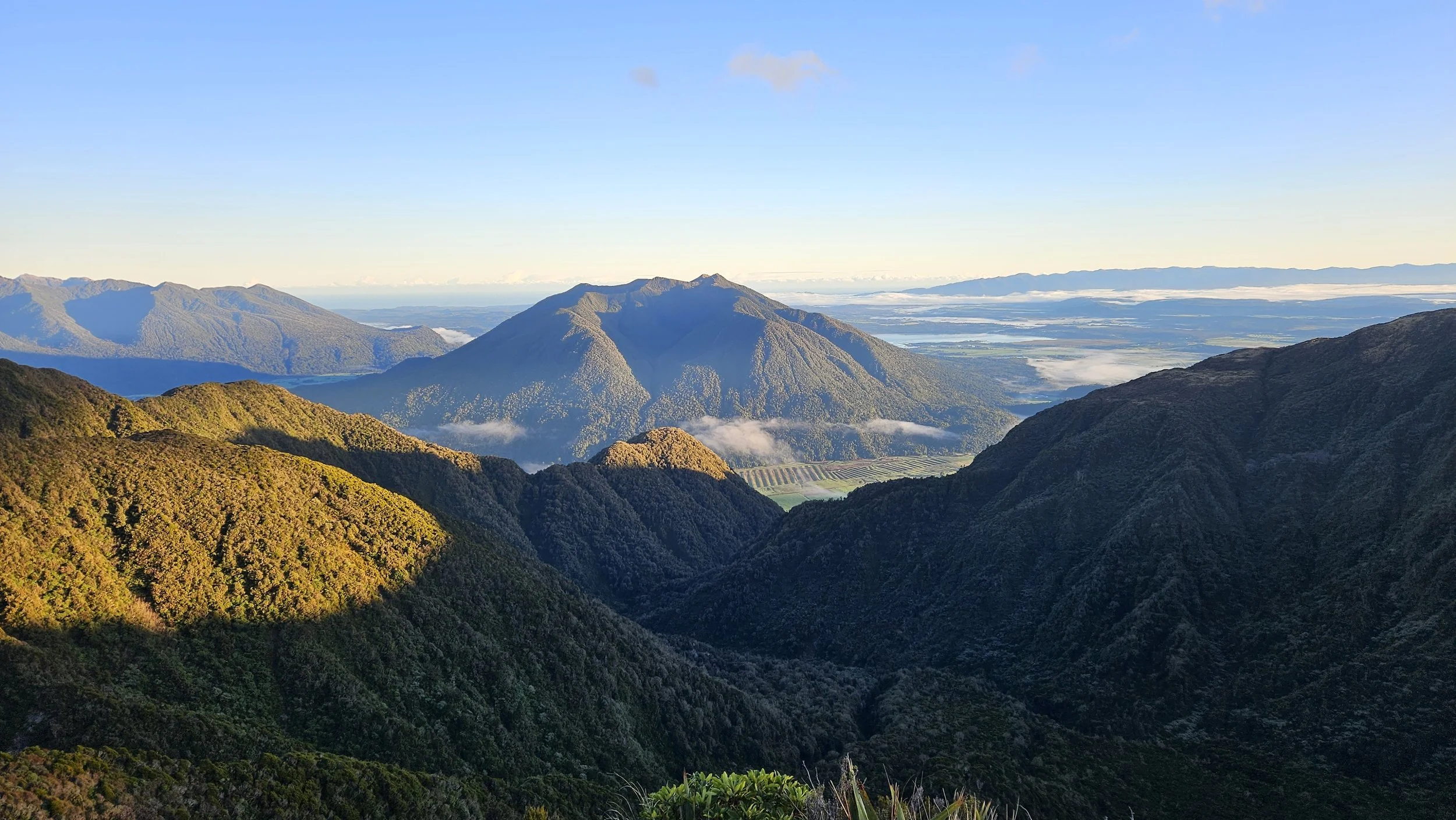
Predator Free Te Kinga is an ambitious landscape-scale project led by the Ara o Te Kīnga Charitable Trust, aiming to eliminate possums and significantly reduce rats, stoats, feral cats, and goats across approximately 17,000 hectares of Tekimoka (Mt Te Kinga) and its surrounding valleys in the Kōtukuwhakaoka (Lake Brunner) catchment, on Tai Poutini (West Coast) of New Zealand’s South Island.
Surrounded by natural barriers such as Lake Brunner, Lake Poerua, and adjacent rivers and farmland, Tekimoka is uniquely positioned to resist predator reinvasion. This natural protection is reinforced by a strong ‘ring of steel’, a network of over 1,500 traps and monitoring devices installed around and across the mountain, maintained by staff, local landowners, students, and volunteers.
The origins of the project trace back to the early 2000s, when a decline in water qulity lead to community focus on improving riparian managment. The Lake Brunner Community Catchment Care Group was formed and built strong trust between local comminuties and partners such as Ngati Waewae, the Ministry of Environement, Landcare Trust, the Department of Conservation, and the West Coast Regional Council.
Early success with improving water quality lead the community to wonder what else could be done, and when some of the local farmers recognised the mountain as a natural ‘island’ they envisioned its potential to become a predator free landscape. The landscape scale Predator Free Te Kinga project was launched in 2020 with a five-year funding agreement from Predator Free 2050 Ltd. With a project design established, traplines were installed along every ridgeline and in two concentric rings around the mountain. In 2024, a 1080-to-zero aerial operation successfully targeted possums, rats, and stoats.
Since that operation, no possums have been detected, and rat and stoat numbers have been substantially reduced. The project has now entered a ‘detect and respond’ phase for possums, employing tools such as ground trapping, hand-laid toxins, thermal drones, and a trained possum detection dog to keep Tekimoka possum-free. To further suppress rats and stoats, over 450 new DOC150 traps are being deployed.
In July 2025, governance of the project transitioned from the West Coast Regional Council to the Ara o Te Kīnga Charitable Trust, a community-led entity now developing a long-term strategy. This next phase will:
Intensify rat and stoat control
Add feral cats, goats, and pigs to the list of target species
Continue ecological monitoring, including acoustic monitoring for birds and bats, lizard and invertebrate tracking, and canopy recovery studies
Lay the groundwork for translocations of taonga species, such as roroa (great spotted kiwi), whio (blue duck), pāteke (brown teal), and powelliphanta (giant snails)
This work is made possible through strong partnerships with the West Coast Regional Council, the Department of Conservation (DOC), OSPRI (TB Free), and the broader community.
Together, we are working to restore native biodiversity, support eco-tourism, and create a predator-free landscape extending from the mountains to the sea—between the Ahaura and Grey Rivers in the north and the Taramakau River in the south—contributing to the national goal of a Predator Free New Zealand by 2050.