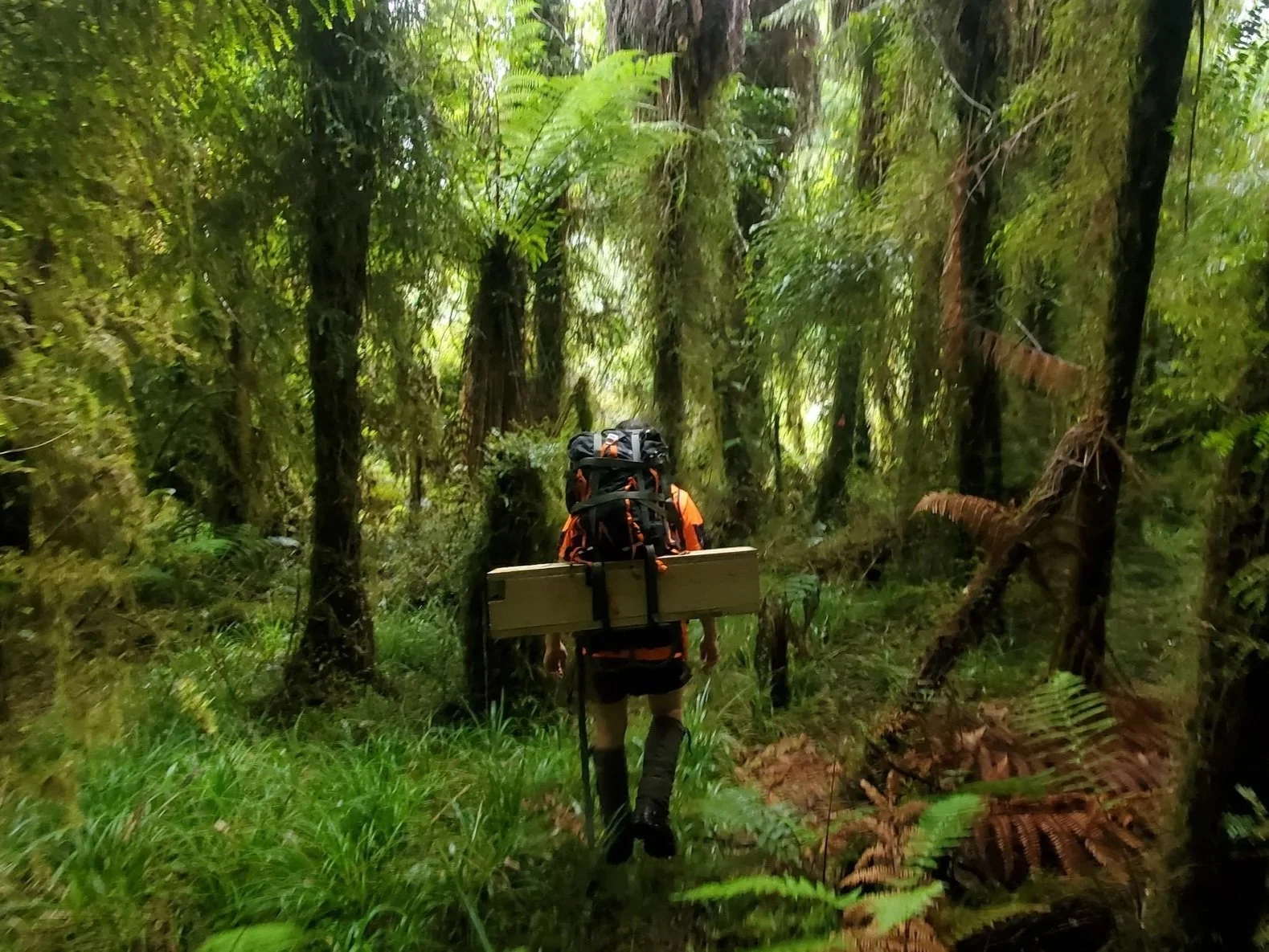
Traps and Technology
A combination of traditional traps and cutting-edge technologies are used throughout the project. DOC150 tunnel traps form the backbone of stoat control, while AT520AI automatic traps have proven highly effective for both possum and rat management. Leg-hold traps equipped with communication nodes are deployed where needed, and live-capture cage traps are used in targeted areas for species such as feral cats and pigs. Currently, around 1,100 traps and devices are in operation on over 100km of traplines, with an additional 450 devices scheduled for installation in the coming months.
The project has been an early adopter of innovative technology. Many of our DOC150 and live-capture traps are fitted with Celium communication nodes from Encounter Solutions. When a trap is triggered, either by vibration or a magnetic switch, the node sends an instant alert to staff, dramatically reducing the need for manual trap checks.
We also use FTP Solutions’ Yarn Mesh communication and AI system to enhance the performance of the NZ AutoTraps models. The AT520AI has a camera positioned at the trap entrance which allows the onboard AI to identify an approaching animal to species level and arm the trap only for approved target species. These traps are solar-powered, capable of resetting indefinitely, and can re-lure themselves for up to six months. Images of detections are sent directly to the online portal.
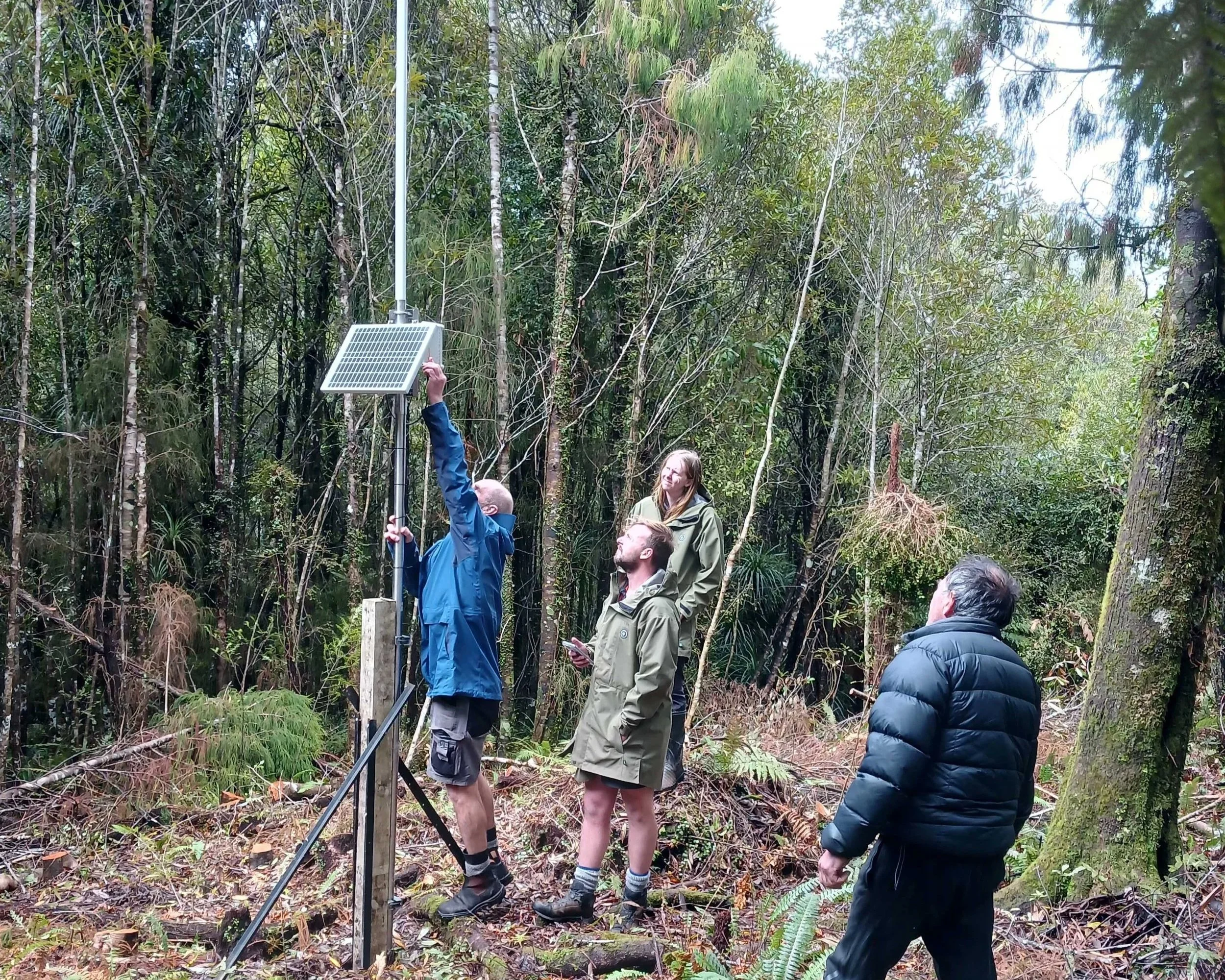
Staff installing a communication antenna
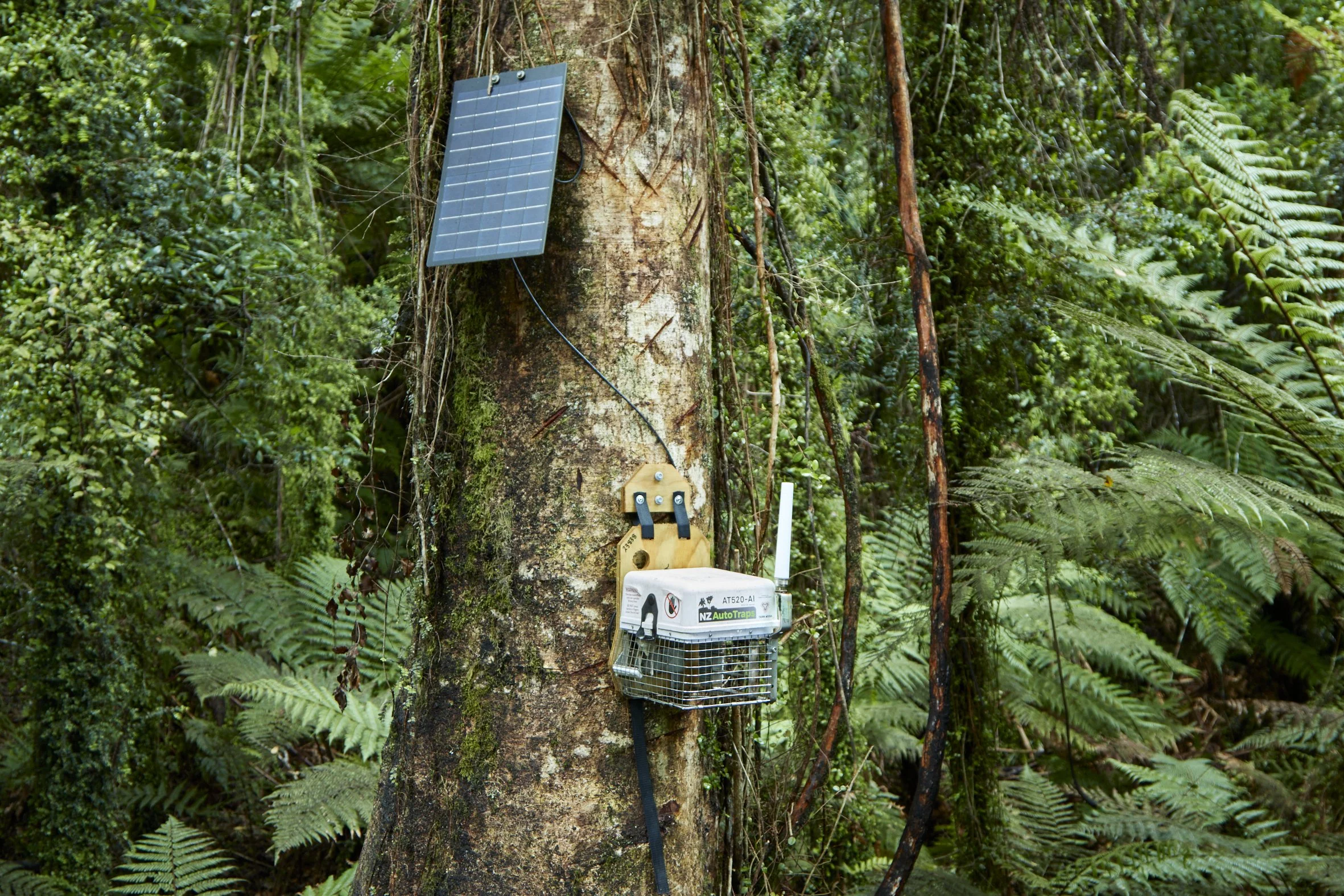
AT520 Ai with solar pannel
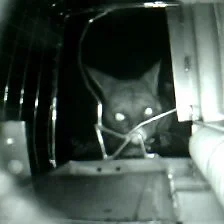
AT520Ai trap view of a possum
Protecting local wildlife
Weka are common on Te Kinga and are very inquisitive, protecting them from our traps is a complicated process! The one main difference between weka and mammalian predators is that weka can’t climb quite as steeply as cats, possums, and stoats. Setting traps above 1.2m and making sure that any access ramps are at more than a 55-degree slope ensures weka cannot access kill traps. The AI enabled traps have had to learn the difference between stretched out weka neck feathers and rain wet rat fur - a hard task for our small onboard AI systems!
Our DOC150 trap tunnels are built with an extra-long lobby section, which is essential for preventing weka from stretching their necks into the danger zone. For feral cat trapping, we use elevated platforms for our cage traps, high enough that cats will readily jump up, but weka cannot. This greatly reduces the number of times we need to return to free an inquisitive weka from a trap it was never meant to enter.
Kea, of course, are another highly inquisitive native species. Protecting them means understanding whether our traps might draw their attention. Before introducing the AT220 traps into the project, we installed them in an unset state and monitored them with trail cameras for 18 months. Only after this extended period, with no recorded kea interactions, did DOC grant us permission to use the traps. The AI enabled AT520Ai now supersedes the AT220 trap.
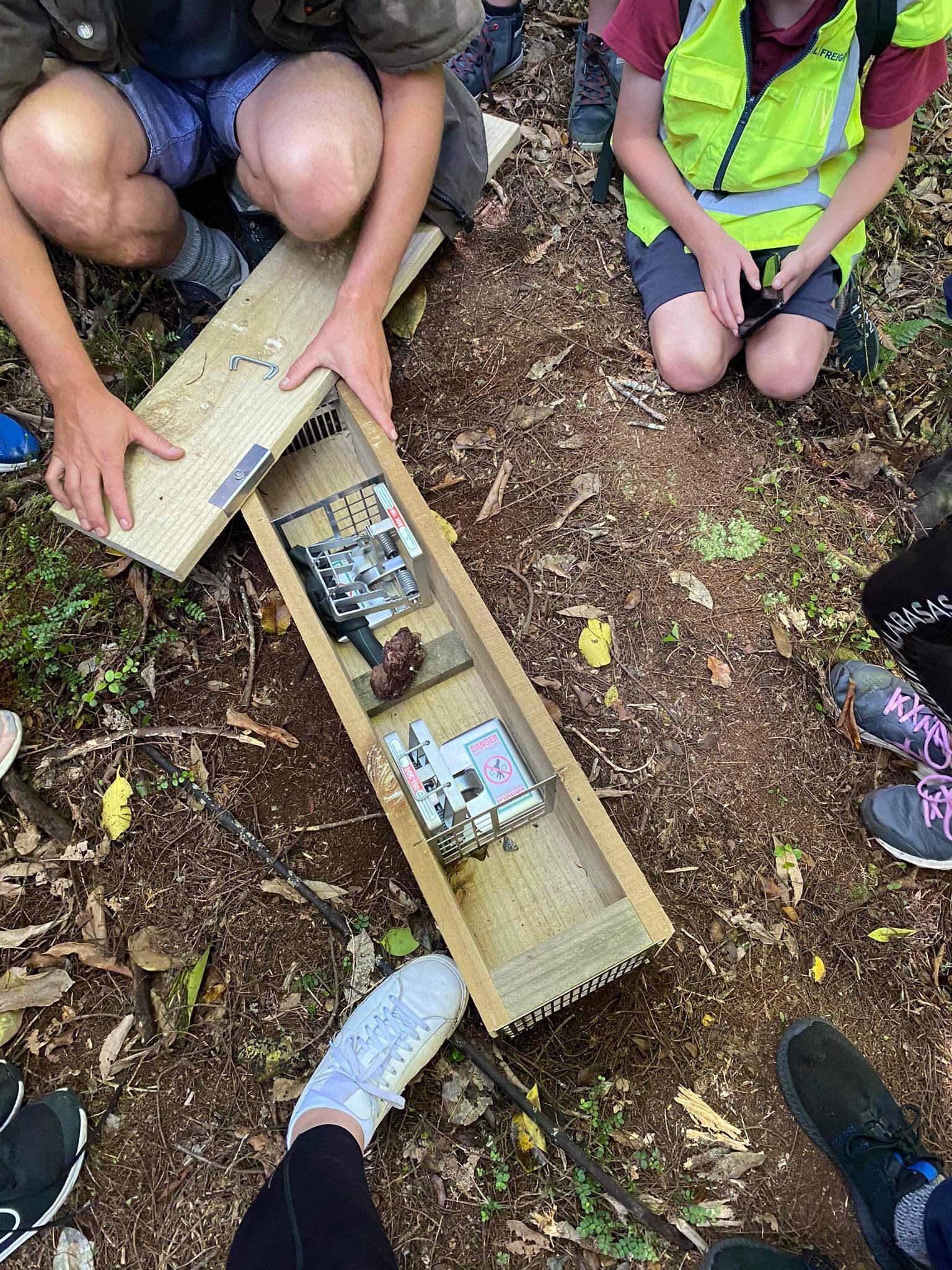
Elongated double set DOC150
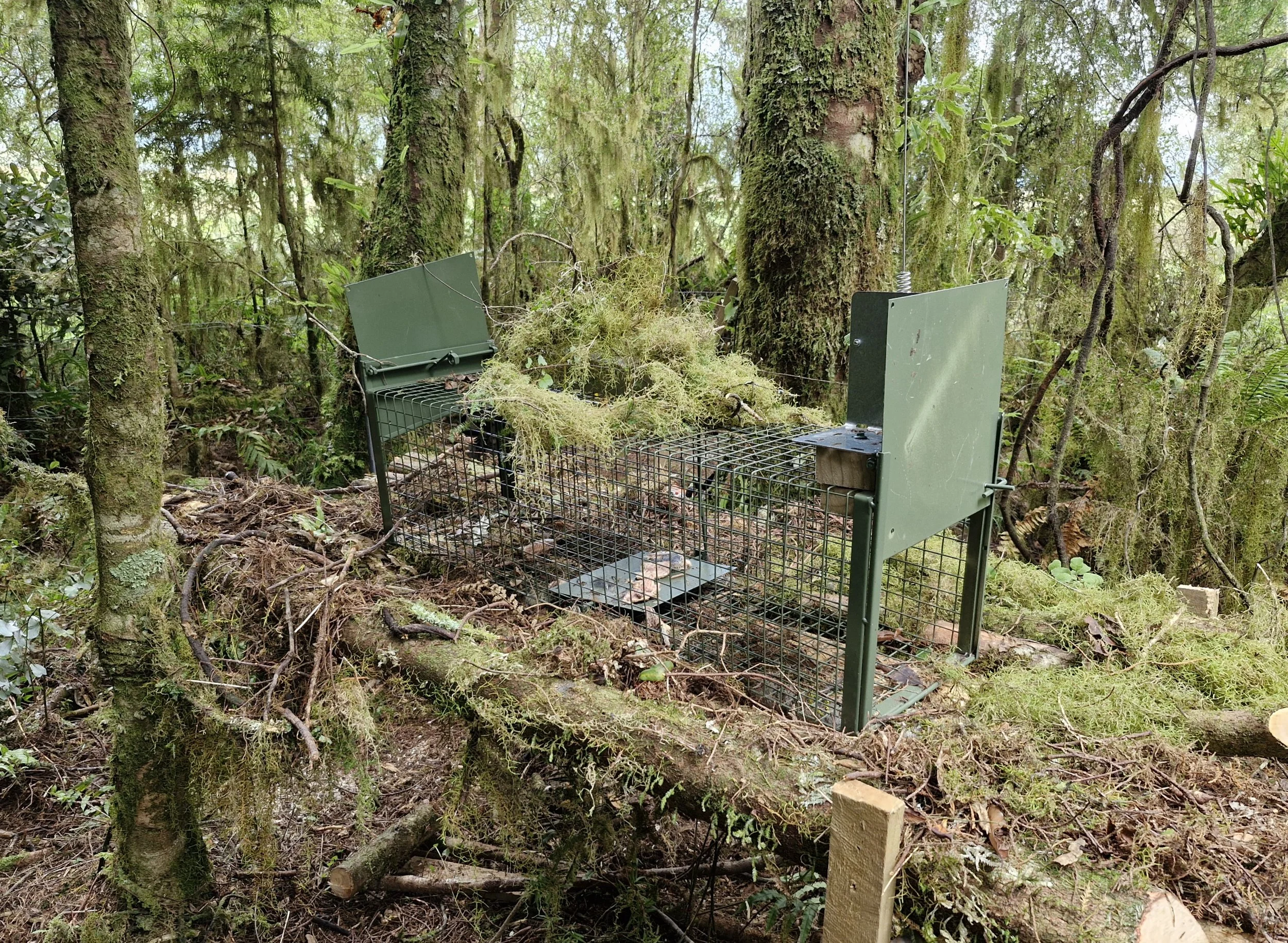
Feral cat trap on raised platform
Technology for Monitoring
We use technology to help us monitor for returning wildlife. AudioMoth acoustic recorders can be set to record for specific time, e.g. dawn, and over several weeks helping to give a picture of birdlife. AudioMoths are stationed at regular spacings throughout the project area.
With their higher frequency calls, Bats are recorded on separate devices loaned to the project by DOC. Bat recorders are stationed on ‘flyways’ where bats are most likely.
Let’s not forget the invertebrates! We use ‘weta motels’ to monitor populations of bush weta. These are wooden boxes that are specifically designed to attract weta but often also house other invertebrates. Thanks to the Lake Brunner school students who helped make the weta motels attractive to humans as well!
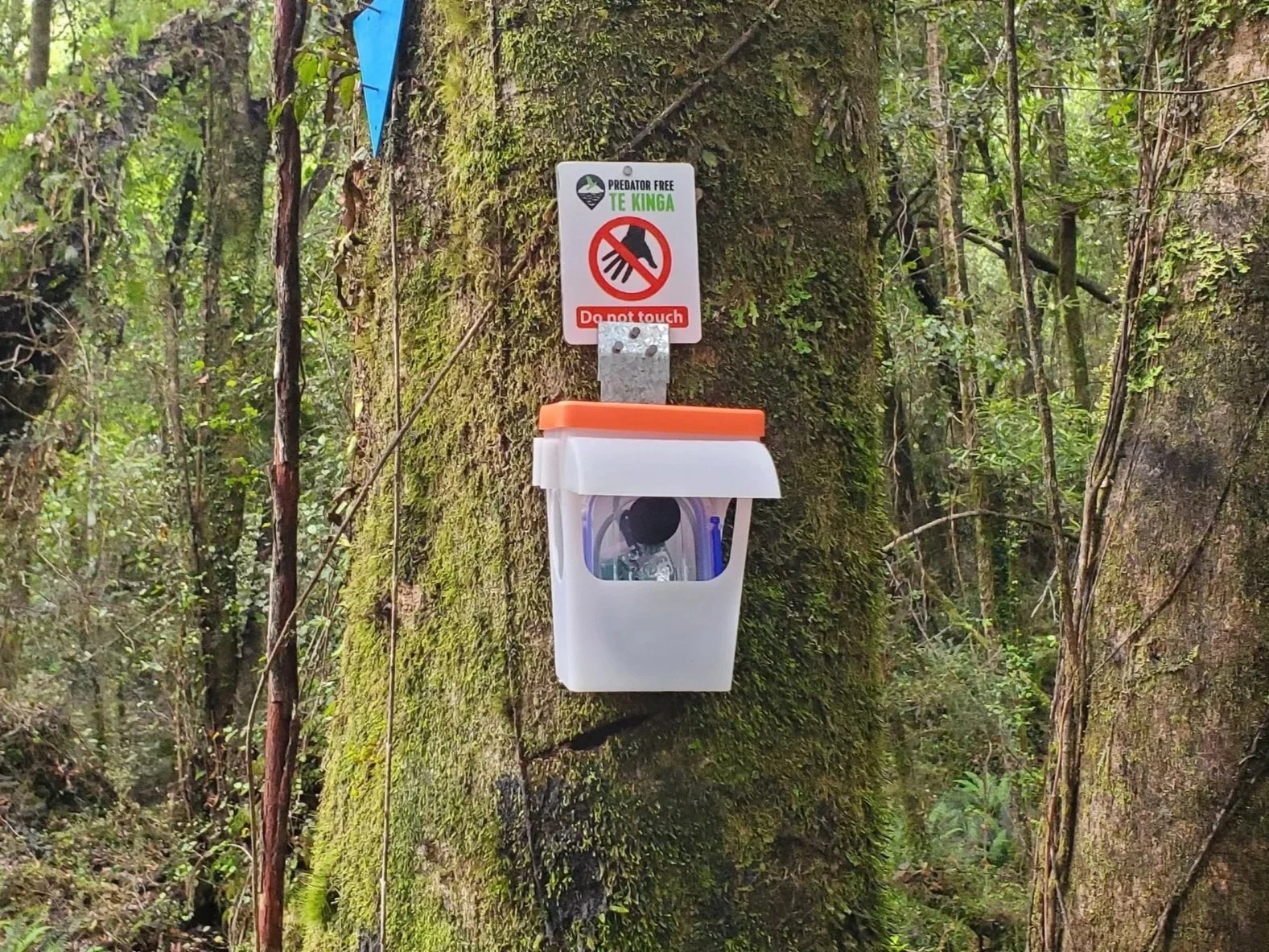
AudioMoth recorder
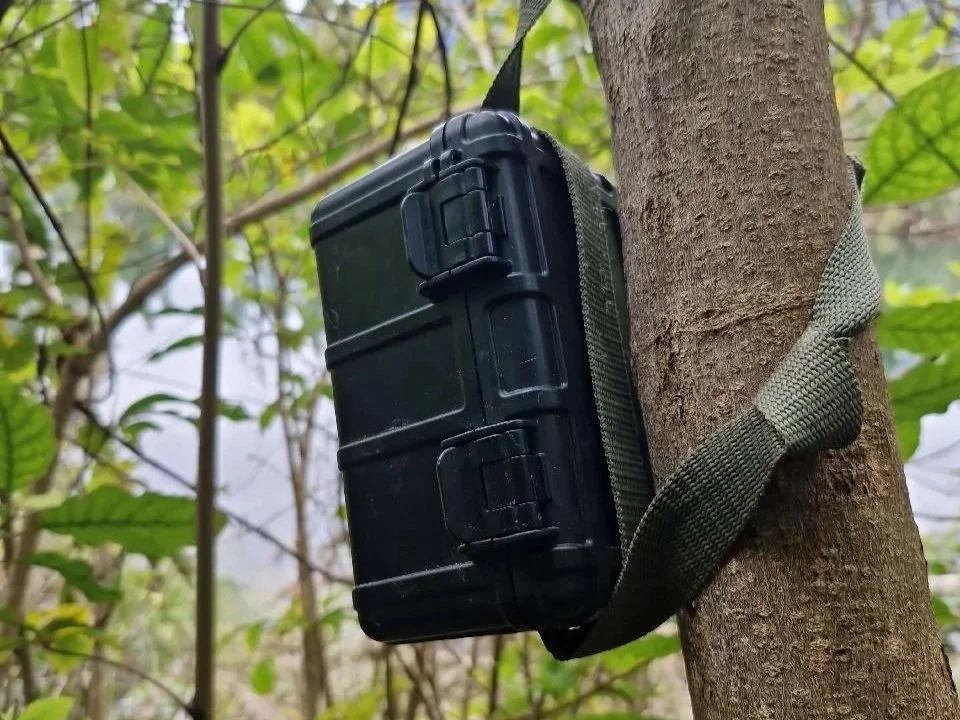
Bat Recorder
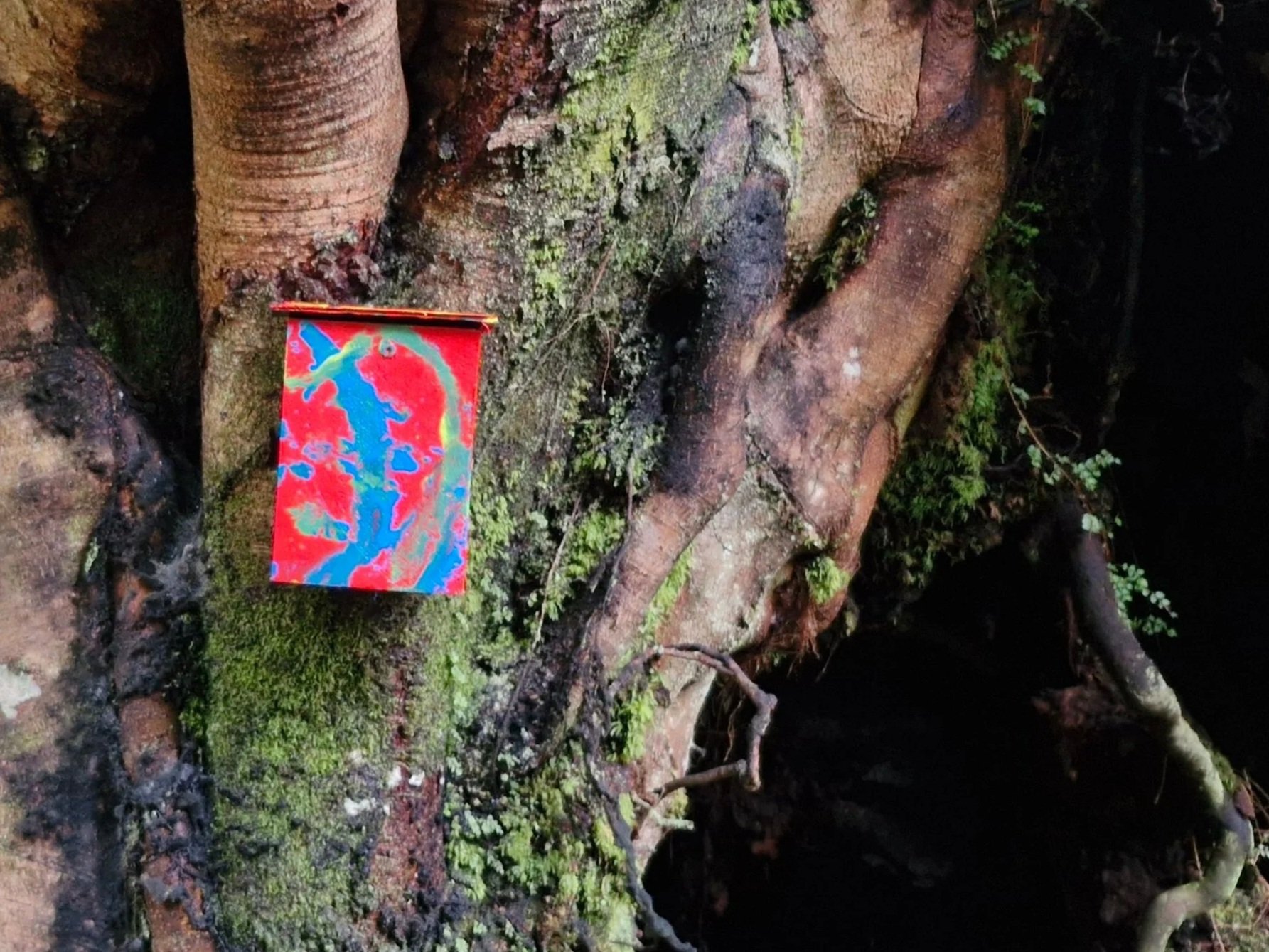
Weta motel

Weta, spider and leaf slug in motel
Environmental DNA (or eDNA) analysis was trialed to determine if testing water in a catchment could detect the presence of terrestrial pests. We tested creeks that descend Te Kinga in areas where we knew possums, rats, and goats were present or had recently been present, potentially leaving scat and other DNA in the environement. Unfortunately we did not detect rats or possums but we did detect goats. As the technology improves this may become a viable way to detect species in areas with particularly difficult terrain.
eDNA sampling was also used to try and detect skinks on Te Kinga. Small, baited tunnels were deployed with special brushes, that collect DNA when animals brush against them. No skink DNA was found on Te Kinga.
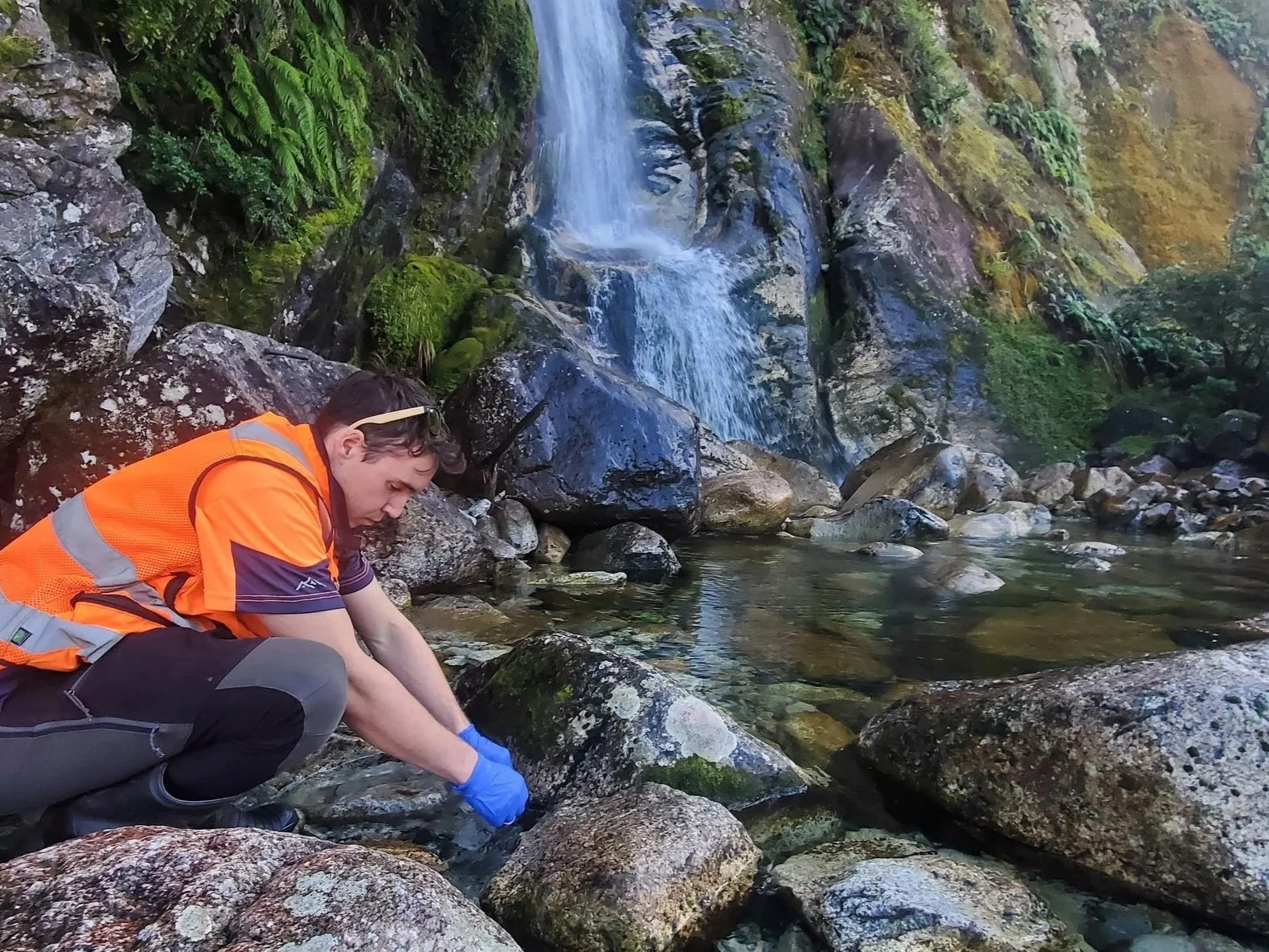
Collecting eDNA from a stream
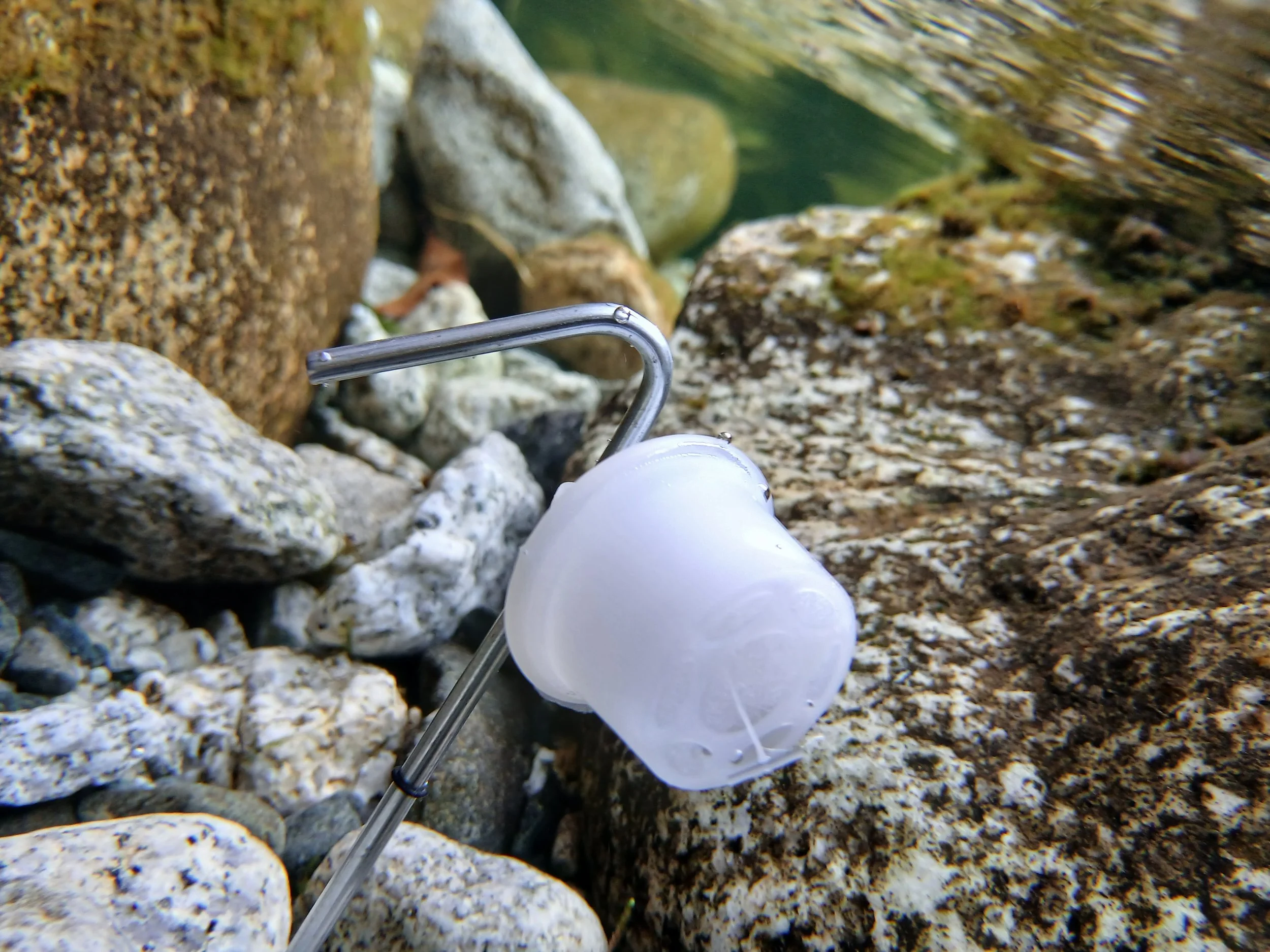
eDNA sampler in stream
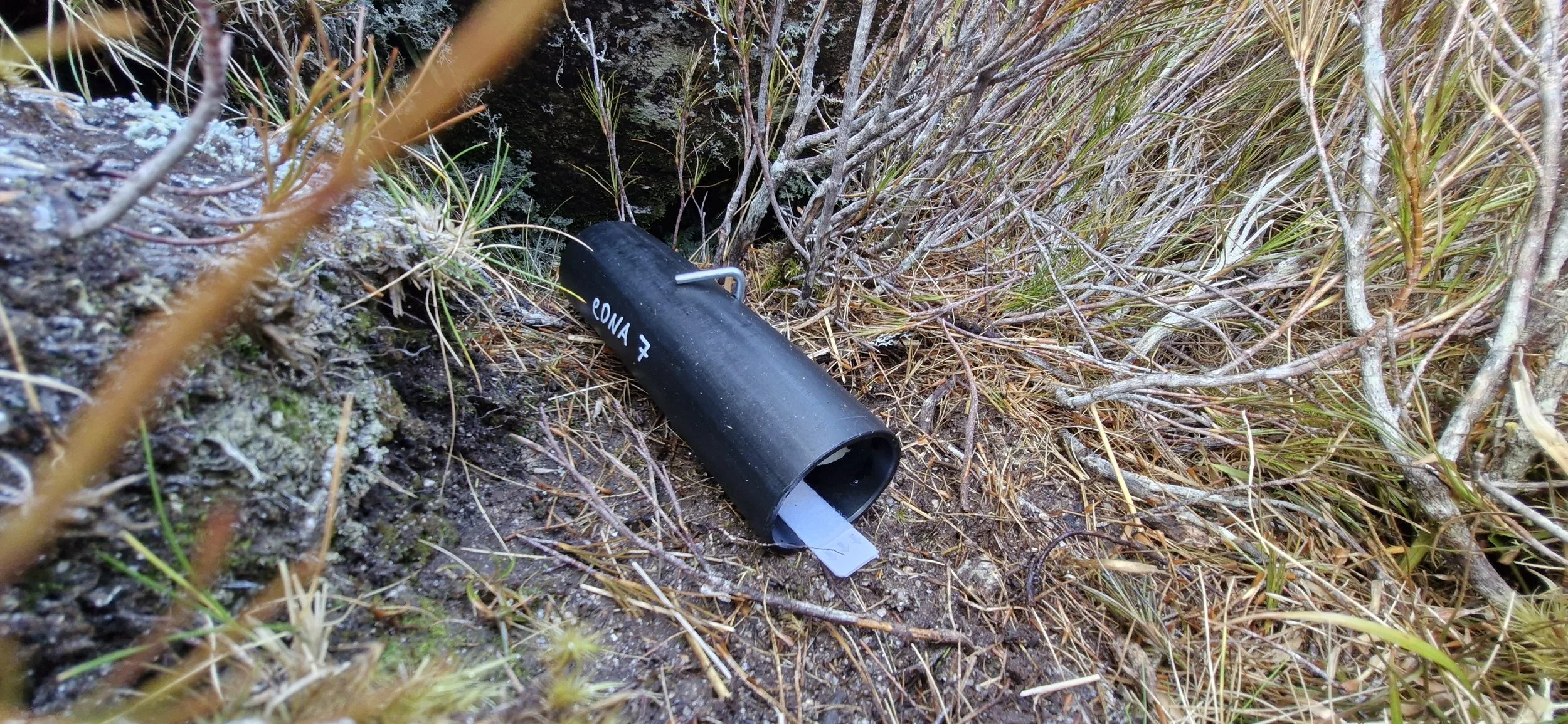
eDNA sampler for skinks
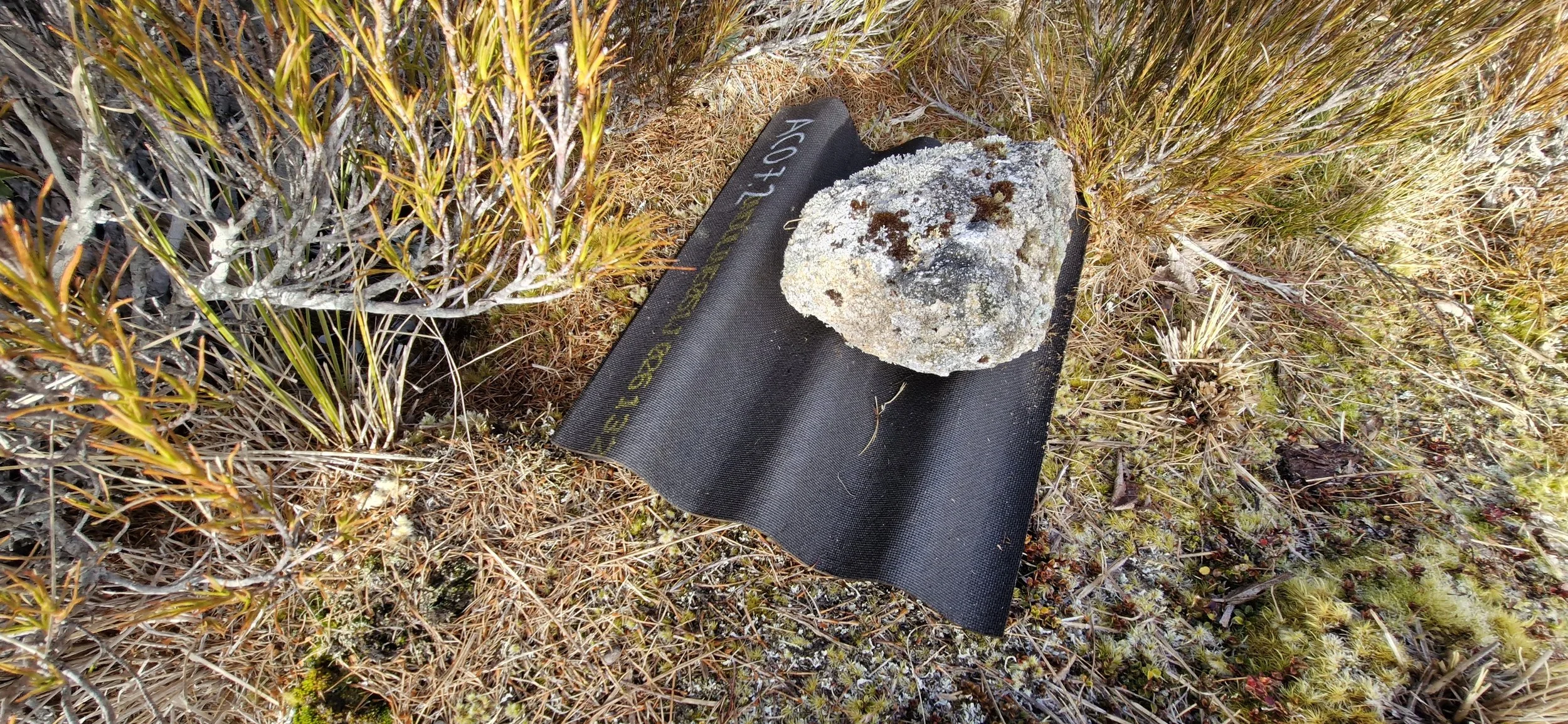
Artificial Cover Object (ACO) to encourage skinks